What is a hitbox? Why some shots miss even when they look good
Every character in a game has an invisible shape that decides whether a shot lands, and it is much simpler than the model you see. This guide explains hitboxes in plain words: why shots near a cape or a hair spike can "miss", why headshots hurt more in many games, and how lag changes who got hit first.
Try the target in the guide: switch between one big box and separate head, body and leg shapes, and watch the same clicks turn into hits and misses.
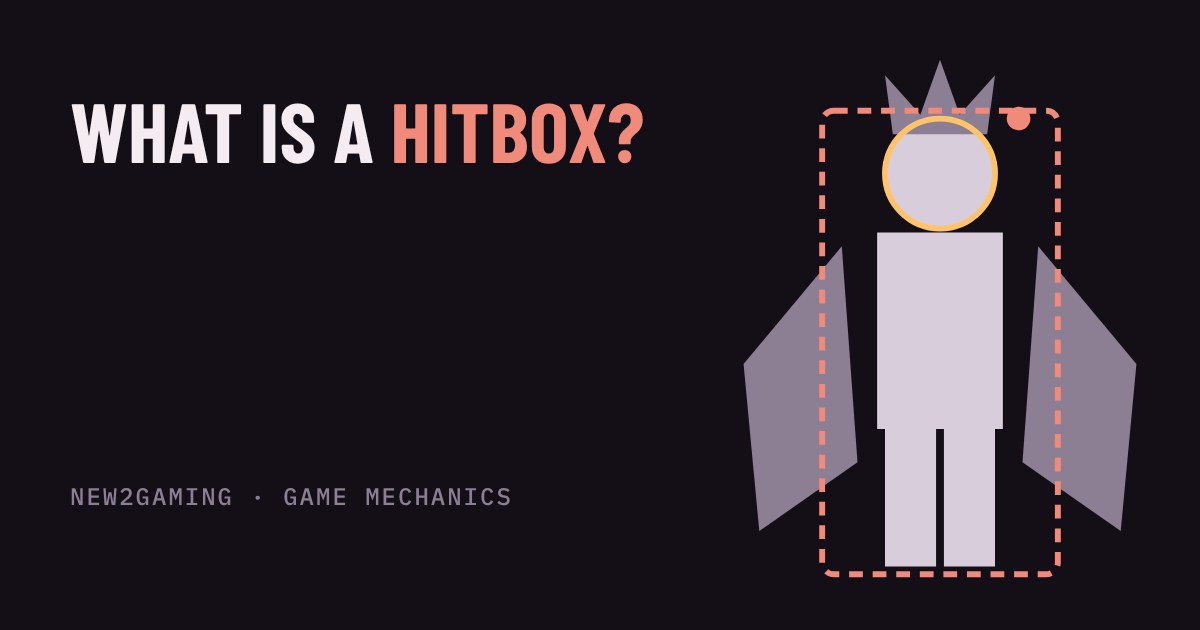
You line up a perfect shot, click, and the game says you missed. Or you get hit around a corner when you were sure you were safe. Before you blame your aim or your internet, it helps to know one thing: the game does not check your bullet against the picture on screen. It checks it against a much simpler invisible shape.
What is a hitbox?
A hitbox is an invisible shape attached to a character, an enemy or an object. When a shot, a sword swing or a punch overlaps that shape, the game counts a hit. The detailed 3D model you see (hair, cape, backpack, gun) is only for show.
Games use simple shapes because they are cheap to check. Testing a line against a box or a capsule takes a tiny amount of maths. Testing it against every triangle of a detailed model, for every player, many times per second, would be far too slow. So developers build a rough stand-in out of boxes, spheres and capsules and test against that.
Try it: shoot the target
Below is a character with a cape and spiky hair. Click or tap anywhere to fire. Switch the hitbox type and watch how the same shots turn into hits or misses.
Why some shots "miss"
With the single big box, your shots land almost anywhere near the character, including empty corners around the legs. With the head, body and leg shapes, the target is tighter and closer to the real silhouette, so more shots that look good still miss, such as the cape and the hair spikes. In both cases the rule is the same: only the invisible shape counts. Developers pick a trade-off between fair-feeling hits and cheap checks, and it differs from game to game.
Why the head hurts more
Many shooters split the body into zones and give each its own damage rule. A shot to the head often deals extra damage, legs often deal less, and the torso sits in the middle. The exact numbers are set by each game and can change in patches, so check the game's own notes rather than trusting a number from another game. The split is also why the zones in the demo are separate shapes.
Hitboxes versus hurtboxes
You will sometimes see two words. A hurtbox is the area where a character can be hurt. A hitbox is the area of an attack that can hurt. In a fighting game, your punch has a hitbox that grows for a few frames, and the opponent's body has hurtboxes. A hit happens when the two overlap. Many people say "hitbox" for both, and in shooters it usually means the target's shape.
Hit registration and lag
There is a second layer. In an online game, you see the world a moment in the past because of network delay. The server decides who hit whom, and it may take your delay into account so that a shot aimed at what you saw can still count. This is often called lag compensation. It is one reason a player can feel hit after reaching cover: on their screen, you were still in the open when they fired. The details differ per game, and a game with high delay for you or the other player makes these moments more common.
What you can do with this
Aim for the centre of a character rather than the edges, because the box is usually tighter than the art. Do not trust accessories, capes or long weapons as part of the target or as cover. If a game offers a training range or a hitbox display, use it to learn the shapes. And if shots feel off online, test on a wired or stable connection before changing your settings.
More in Game Mechanics
all Game Mechanics →17 Oct What is rubber banding? Why racing game opponents always catch up Ever pulled far ahead in a racing game, only to find the computer cars right behind you a moment later? That is rubber banding: a hidden… Game Mechanics
15 Oct Is the loot drop rigged? RNG, drop rates and pity timers explained Ever gone ten drops in a row without the item you wanted? It feels rigged, but it is usually just random chance doing what it does. This… Game Mechanics
13 Oct What is aim assist? How games help controller players aim Aim assist is the small, hidden help that shooters give controller players: the crosshair slows down near an enemy, and the view quietly… Game Mechanics
11 Oct Delay or rollback? How online games hide lag: netcode explained Online games have to keep two computers in agreement while messages take time to travel. Delay-based netcode waits for both players'… Game Mechanics
9 Oct Why does 60 FPS still feel choppy? Frame time and stutter explained Your game says 60 FPS but still feels choppy? The counter shows an average. What your eyes notice is frame time, the gap between each… Game Mechanics
7 Oct What is tick rate? Why some game servers feel sharper than others Online games run on a server that does not watch the match like a film. It works in steps called ticks, and the tick rate is how many steps…