How much gaming is too much? Build a screen-time plan that fits the day
There is no single right number of gaming hours, because what matters is what the gaming pushes out. This guide shows a simple order of priority: sleep, school, meals, movement and people first, then gaming in what is left.
Build a typical school day or weekend with sliders and see how much free time remains. You also get warning signs that gaming is crowding things out, and how to turn the plan into a routine your child helped write.
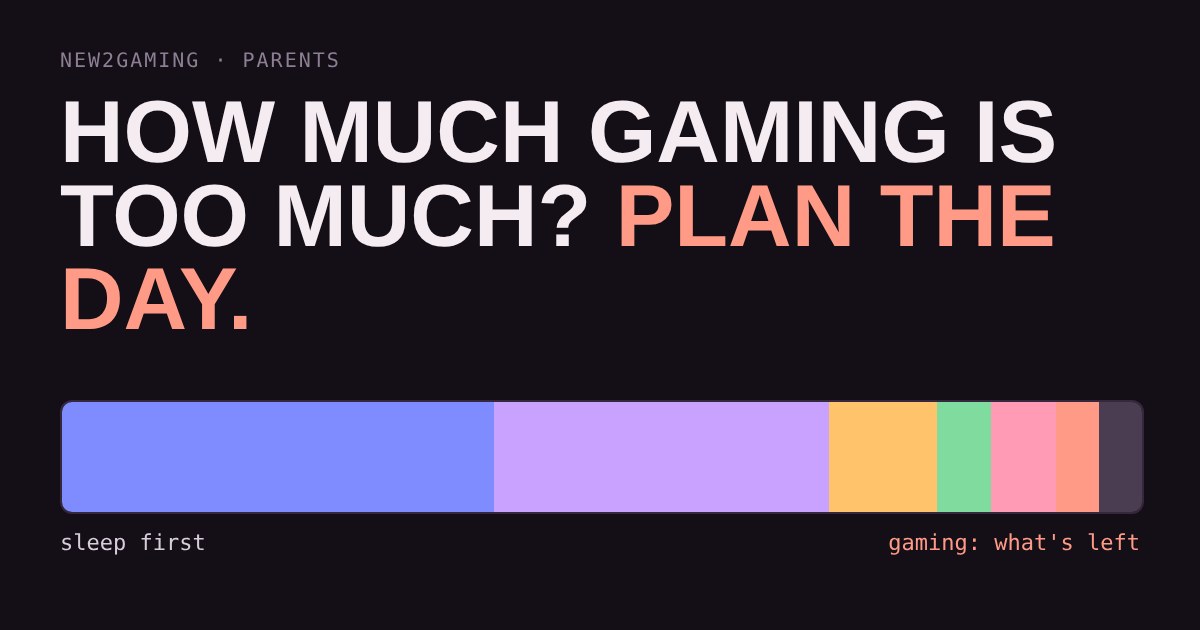
"How much gaming is too much?" is the question almost every parent asks, and almost every answer online is a single number. The trouble is that one number ignores the thing that actually matters: what the gaming pushes out. An hour of gaming after everything else is done is a very different hour from one that eats into sleep.
Start with what must fit first
Paediatric groups such as the American Academy of Pediatrics have moved away from one-size-fits-all hour limits for school-age children. Instead they suggest a family media plan: decide together what a good day looks like, and make sure screens don't crowd out sleep, physical activity, schoolwork, meals and time with people.
That gives you a simple order of priority. Fill the day with the essentials first, then see what is left. Gaming gets that leftover space, and some of it should stay unplanned, because kids need time to do nothing in particular.
- Sleep comes first. Common guidance is roughly 9–12 hours for ages 6–12 and 8–10 hours for teenagers.
- School and homework are fixed on school days.
- Meals and chores take more time than people expect.
- Outdoors and movement, plus friends and family, are the things most likely to get squeezed.
Try it: plan one day
Drag the sliders to build a typical day for your child. The bar shows all 24 hours. Watch what happens to the free time that is left when gaming grows.
What the planner shows
Notice that the answer to "how many hours of gaming?" changes with the day. On a school day there may be only an hour or so of room before sleep or homework suffers. On a weekend the same child can reasonably have a lot more. That is why a flat daily limit tends to feel unfair to kids and to miss the point for parents.
It also helps to separate how long from when and what. A game that can't be paused (a ranked match, a story mission) needs a warning before the time is up. A late-night session costs more than the same session after school, because it cuts into sleep.
Signs it is crowding things out
Hours alone don't tell you if gaming is a problem. These are better signals:
- Sleep is getting shorter, or your child is tired most mornings.
- Schoolwork, meals or plans with friends are regularly skipped for gaming.
- Stopping leads to big blow-ups most times, not just now and then.
- Your child seems to have lost interest in things they used to enjoy.
- Gaming seems to be the only way they handle stress or boredom.
One bad evening isn't a pattern. If several of these stay true for weeks, talk to your child first, then consider speaking to your doctor or a school counsellor.
Turning a plan into a routine
Plans stick better when kids help write them. Sit down together, use the sliders above as a starting point, and agree on a few simple rules: devices out of the bedroom at night, homework before games on school days, and a five-minute warning before time is up. Most consoles and platforms let you set time limits and bedtime cut-offs in their built-in parental controls, which means you don't have to be the one who nags.
Then check back in after a couple of weeks. Kids grow, schedules change, and a plan that fit in September may not fit in March.
What to look for
There is nothing to buy for this one. Instead, look for these things in your own plan:
- Sleep that stays in the recommended range for your child's age, every night.
- Time for movement and for people, written into the day rather than hoped for.
- Rules that differ between school days and weekends, agreed with your child.
- A way to stop without a fight: a warning, a save point, a clear end time.
More in Parents
all Parents →17 Oct Which parental controls should you switch on first? A setup planner by age Every console has parental controls, but the menus are long and confusing. This guide boils them down to four switches: time, spending… Parents
15 Oct How much does in-game currency really cost? Gems, packs and spending limits Games sell extras with made-up currency, and packs rarely match item prices, so leftovers nudge you to buy more. Try a mock shop to see the… Parents
13 Oct Mute, block or report? Which button to press when a player is a problem Games give you three tools for dealing with unpleasant players: mute, block and report. They do very different jobs, and the right one… Parents
11 Oct How loud is too loud? Headset volume and your child's hearing Loud headset audio can damage hearing slowly and painlessly, and the volume number on a console is not a safe guide. What matters is how… Parents
9 Oct Is this game okay for my child? A five-minute check before you say yes An age rating tells you what is in a game, not what happens around it: who can chat with your child, what the shop pushes, and what keeps… Parents
7 Oct Is that free coins offer real? How to spot gaming scams Gaming scams work because games run on things children want: free coins, rare items and friends. Most follow four patterns: the…