Do gaming breaks matter? Eyes, posture and the 20-20-20 rule for kids
Do long gaming sessions strain your child's eyes and back? Screens can leave eyes dry and tired because we blink less while focusing, and a bent neck over a handheld adds to it. The fix is simple.
This guide explains the 20-20-20 rule, the 1-2-10 rule of thumb for screen distance, and why breaks matter. Then try a play-session planner: pick a screen, set the seat distance and session length, and see when the look-aways and breaks would fall.
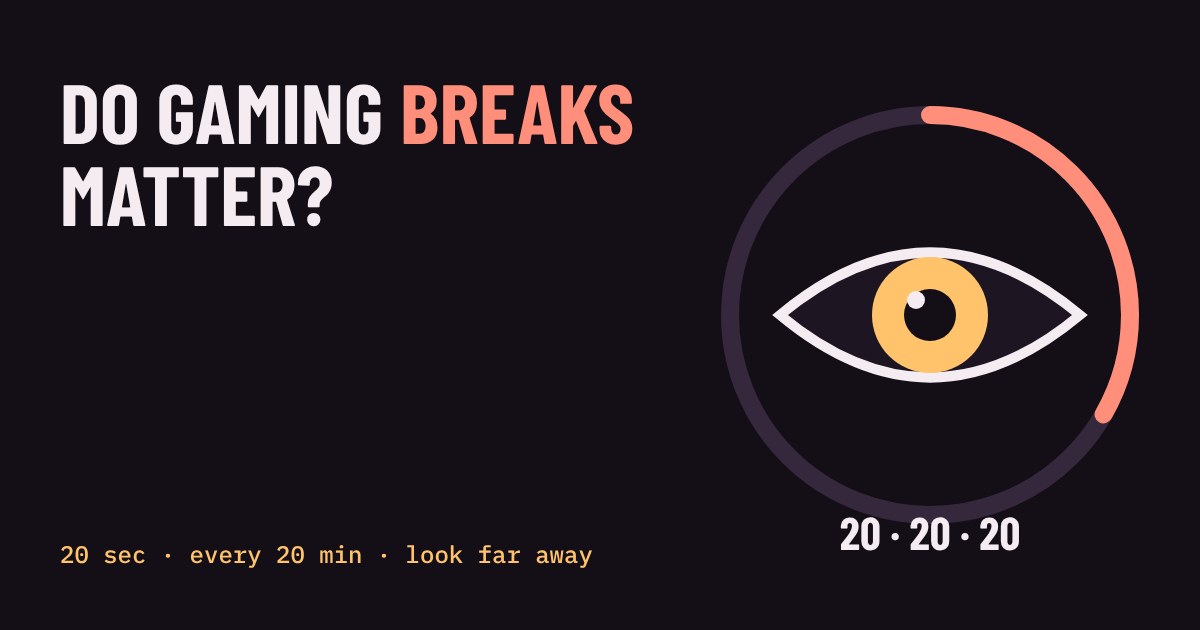
If your child plays for an hour, what actually tires out? The answer is mostly small things: eyes that blink less, a neck bent over a handheld, a back that has not moved. None of it is dramatic, and all of it is easy to fix with a few habits. This guide covers what the main health bodies suggest, then lets you try the numbers on your own setup.
Why screens tire eyes
Looking at something close for a long time keeps the eye's focusing muscle working. Concentrating on a game also makes people blink less often. The American Academy of Pediatrics' parent site says staring at a screen can cut blinking roughly in half, which leaves eyes dry and scratchy. The result is called digital eye strain: tired, blurry or dry eyes and sometimes a headache. It usually goes away with rest.
Blue light gets a lot of attention, but the same source says there is no evidence it harms the eyes. It may make falling asleep harder late in the evening, so the sleep advice (no screens in the bedroom, and screens off for an hour before bed) matters more than special glasses.
The 20-20-20 break
The best-known habit is the 20-20-20 rule: every 20 minutes, look at something at least 20 feet (about 6 metres) away for 20 seconds. It comes from the optometry world rather than from a big trial, so treat it as a sensible reminder, not a medical guarantee. Any regular break is better than none, and the point is to look far away and blink on purpose.
Alongside it, the same pediatric guidance suggests stepping away from screens for at least 10 minutes every hour. In a game, that fits naturally between matches, at a loading screen, or when a level ends.
Distance and height: the 1-2-10 rule
A simple rule of thumb for how far away the screen should be: about 1 foot (30 cm) for a phone or handheld, about 2 feet (60 cm) for a desktop monitor or laptop, and about 10 feet (3 metres) for a TV, depending on its size. On a desk, the screen should sit slightly below eye level. Looking up widens the eyes, and they dry faster.
Handhelds are the usual problem. A child who curls over a console tends to hold it much closer than a foot and keeps their neck bent. Propping it up, or playing on the TV for longer sessions, solves most of it.
Try it: a play-session planner
Pick a screen, slide the child's seat distance to match your setup, then set how long the session will run. The timeline shows when the short looks and the full breaks would fall.
Posture and movement
The same ideas apply to the body. A child sitting still for an hour stiffens up, whatever the screen. Some simple habits:
Feet flat on the floor or a footrest, back supported, screen straight ahead, and the controller or mouse close enough that shoulders stay relaxed. For floor or sofa play, a cushion behind the back helps more than you would expect. The pediatric guidance also suggests children aged 6 and over get about 60 minutes of physical activity a day, which gaming should not replace.
Outdoor time deserves a mention. Some studies suggest that lots of close-up indoor activity may be linked to more short-sightedness in children, but the pediatric source says this is not proven. What is safe to say is that playing outside gives eyes practice at long distances and natural light, and that is a good use of a break.
What to look for
You do not need special gear. A few things make healthy habits easy:
Set a timer. Children rarely notice time passing in a game. Use a kitchen timer, the console's own play-time tools, or a friendly rule such as "break between matches". A default that the device enforces beats a reminder that has to be remembered.
Choose the right screen for long sessions. Handhelds and phones are fine for short bursts; the TV or a monitor at a sensible distance is easier on eyes and neck for longer play.
Make breaks pleasant. Water, a snack, a stretch or a step outside are easier to sell than "stop playing". Looking out of a window counts for the 20-second version.
Watch for signs. Frequent rubbing of the eyes, squinting, headaches, or holding things very close can mean an eye test is due. A child who struggles to see the board at school should see an optician or eye doctor, not just take more breaks.
The short version
Look far away for 20 seconds every 20 minutes, take about 10 minutes away from the screen every hour, keep screens at a comfortable distance and slightly below eye level, and let the day include movement and daylight. If symptoms continue, speak to a doctor or eye specialist. This guide is general information, not medical advice.
More in Parents
all Parents →23 Oct What do game age ratings mean? PEGI, ESRB and what they leave out An age rating tells you what a game contains, not how hard it is or who you'll meet online. PEGI and ESRB use different age steps, but both… Parents
21 Oct How do you spot a gaming scam? Free skins, fake logins and the four red flags Gaming scams target kids with free currency, fake "account security" emails and strangers who want a login code. They all pull the same… Parents
19 Oct How much gaming is too much? Build a screen-time plan that fits the day There is no single right number of gaming hours, because what matters is what the gaming pushes out. This guide shows a simple order of… Parents
17 Oct Which parental controls should you switch on first? A setup planner by age Every console has parental controls, but the menus are long and confusing. This guide boils them down to four switches: time, spending… Parents
15 Oct How much does in-game currency really cost? Gems, packs and spending limits Games sell extras with made-up currency, and packs rarely match item prices, so leftovers nudge you to buy more. Try a mock shop to see the… Parents
13 Oct Mute, block or report? Which button to press when a player is a problem Games give you three tools for dealing with unpleasant players: mute, block and report. They do very different jobs, and the right one…